Astrology Learn Hub

Astrology Houses

If you are searching for astrology houses (not just a generic horoscope), this page explains all 12 houses in plain language—what each house governs, how houses differ from zodiac signs, and how to find them in your birth chart using AstroCarto's free tools.

Start here

Find your astrology houses in your birth chart

Most visitors want one of three paths: generate a chart with house placements, confirm the Ascendant that starts the 1st house, or learn how houses fit into a full natal chart reading.

House-by-house guide

The 12 astrology houses explained

Below is a complete reference for each house in astrology—what it rules, its natural sign correspondence, and how to begin reading placements in your birth chart.

Natural sign associations (for example, Aries for the 1st house) are traditional teaching references—they do not mean that sign sits on your house cusp in your personal chart.

AngularNatural sign:: Aries

1st House — Self, Identity & Appearance

Ascendant, rising sign, vitality, first impressions

The 1st house is the only house that represents you directly. It begins at the Ascendant (rising sign) and describes physical presence, temperament, and how you instinctively meet the world. Planets here color your default mode of self-expression. A Mars in the 1st house may come across as direct and energetic; Venus in the 1st often reads as approachable and aesthetically aware. Because the 1st house sets the entire house wheel, birth time accuracy is essential—the Ascendant changes roughly every two hours.

SuccedentNatural sign:: Taurus

2nd House — Money, Values & Possessions

Income, assets, self-worth, material security

The 2nd house governs what you earn, own, and value—including how you measure self-worth beyond a paycheck. It describes spending habits, talents you can monetize, and attitudes toward material stability. Venus or Jupiter in the 2nd often correlates with ease around resources; Saturn may emphasize discipline and long-term building. This house is practical: it answers how you support yourself and what you consider worth investing in.

CadentNatural sign:: Gemini

3rd House — Communication & Daily Learning

Siblings, writing, short trips, neighborhood

The 3rd house covers everyday communication: conversations, emails, social media, early education, and relationships with siblings or close neighbors. It also rules short-distance travel and how you process information in daily life. Mercury in the 3rd strengthens verbal and written agility; the Moon here may emphasize emotional storytelling. For many searches about astrology houses, the 3rd is the bridge between private inner life (4th house) and public visibility (10th house).

AngularNatural sign:: Cancer

4th House — Home, Family & Roots

IC, parents, private life, emotional foundations

The 4th house sits at the bottom of the chart at the IC (Imum Coeli). It describes home, family of origin, private emotional life, and the sense of belonging you carry inside. Planets here often show where you retreat to recharge and what 'home' means beyond an address. Moon in the 4th intensifies domestic and ancestral themes. In relocation astrology, the 4th house connects naturally to questions about where you feel rooted—often explored alongside Moon IC astrocartography lines.

SuccedentNatural sign:: Leo

5th House — Creativity, Romance & Joy

Dating, children, hobbies, self-expression

The 5th house is the playground of the chart: romance, creative projects, hobbies, performance, and children (biological or metaphorical). It describes what you do for pleasure and where you take personal risks. Sun or Venus in the 5th often amplifies charisma and artistic flair. Unlike the 7th house's committed partnership focus, the 5th emphasizes attraction, fun, and authentic self-expression without the weight of long-term contract.

CadentNatural sign:: Virgo

6th House — Work, Health & Daily Routines

Employment, habits, wellness, service

The 6th house governs daily work rhythms, health maintenance, and habits—not necessarily your public career title (that's the 10th), but how you show up in everyday tasks. It covers pets, service roles, and the systems that keep life running. Mars in the 6th can drive a strong work ethic; Neptune may blur boundaries between work and rest. When reading astrology houses for wellness themes, start with the 6th and any planets aspecting it.

AngularNatural sign:: Libra

7th House — Partnerships & Marriage

Descendant, committed relationships, contracts

The 7th house begins at the Descendant—the sign opposite your Ascendant. It rules committed one-on-one partnerships: marriage, business partners, and significant one-on-one relationships. Planets here describe what you seek in a partner and how you negotiate equality. Venus in the 7th emphasizes harmony in relationships; Uranus may prefer unconventional or freedom-oriented bonds. The 7th is the mirror house: it often shows traits you project or attract in others.

SuccedentNatural sign:: Scorpio

8th House — Transformation & Shared Resources

Intimacy, inheritance, debt, psychological depth

The 8th house covers what you share with others—money, secrets, power, and emotional depth. It rules inheritance, taxes, loans, and the psychology of intimacy. Planets here often correlate with periods of profound change rather than surface-level events. Pluto or Mars in the 8th intensifies themes of control, surrender, and regeneration. This house asks where you merge with another person or system versus where you maintain autonomy.

CadentNatural sign:: Sagittarius

9th House — Travel, Philosophy & Higher Learning

Long-distance travel, religion, publishing, worldview

The 9th house expands perspective: foreign travel, university education, spiritual or philosophical frameworks, and publishing. It describes the beliefs that orient your life and how you search for meaning beyond daily routine. Jupiter in the 9th is classically strong—curiosity, teaching, and cross-cultural connection come naturally. For relocation questions, 9th house themes often appear when someone moves abroad for study, faith, or adventure rather than career alone.

AngularNatural sign:: Capricorn

10th House — Career, Reputation & Public Life

Midheaven, MC, vocation, legacy, authority

The 10th house sits at the Midheaven (MC)—the most visible point of the chart. It governs career direction, public reputation, and the legacy you build in the world. Planets here broadcast through professional identity: Saturn in the 10th may emphasize slow mastery; Sun in the 10th seeks recognition. When people ask which astrology house rules career, the answer is the 10th. Use the Midheaven Calculator to find your MC sign, then explore Sun MC or Jupiter MC astrocartography lines for location-based career themes.

SuccedentNatural sign:: Aquarius

11th House — Friends, Community & Hopes

Groups, networks, social causes, future vision

The 11th house describes friendship circles, communities, and the hopes you hold for the future. It covers teamwork, social media networks, and alignment with collective movements. Uranus or Saturn in the 11th shapes how you relate to groups—whether as innovator, organizer, or independent contributor. This house answers who your people are and what shared vision you are working toward over the long term.

CadentNatural sign:: Pisces

12th House — Subconscious, Solitude & Endings

Hidden life, spirituality, rest, closure, institutions

The 12th house is the most inward-facing sector: dreams, solitude, spirituality, and what operates below conscious awareness. It also connects to endings, retreat, and institutions where life slows down (hospitals, monasteries, creative isolation). Planets here may express subtly or require privacy to develop fully. Neptune in the 12th amplifies imagination and sensitivity; Saturn may emphasize disciplined spiritual practice. The 12th completes the house cycle before returning to the 1st house of fresh identity.

FOUNDATION

What Are Astrology Houses?

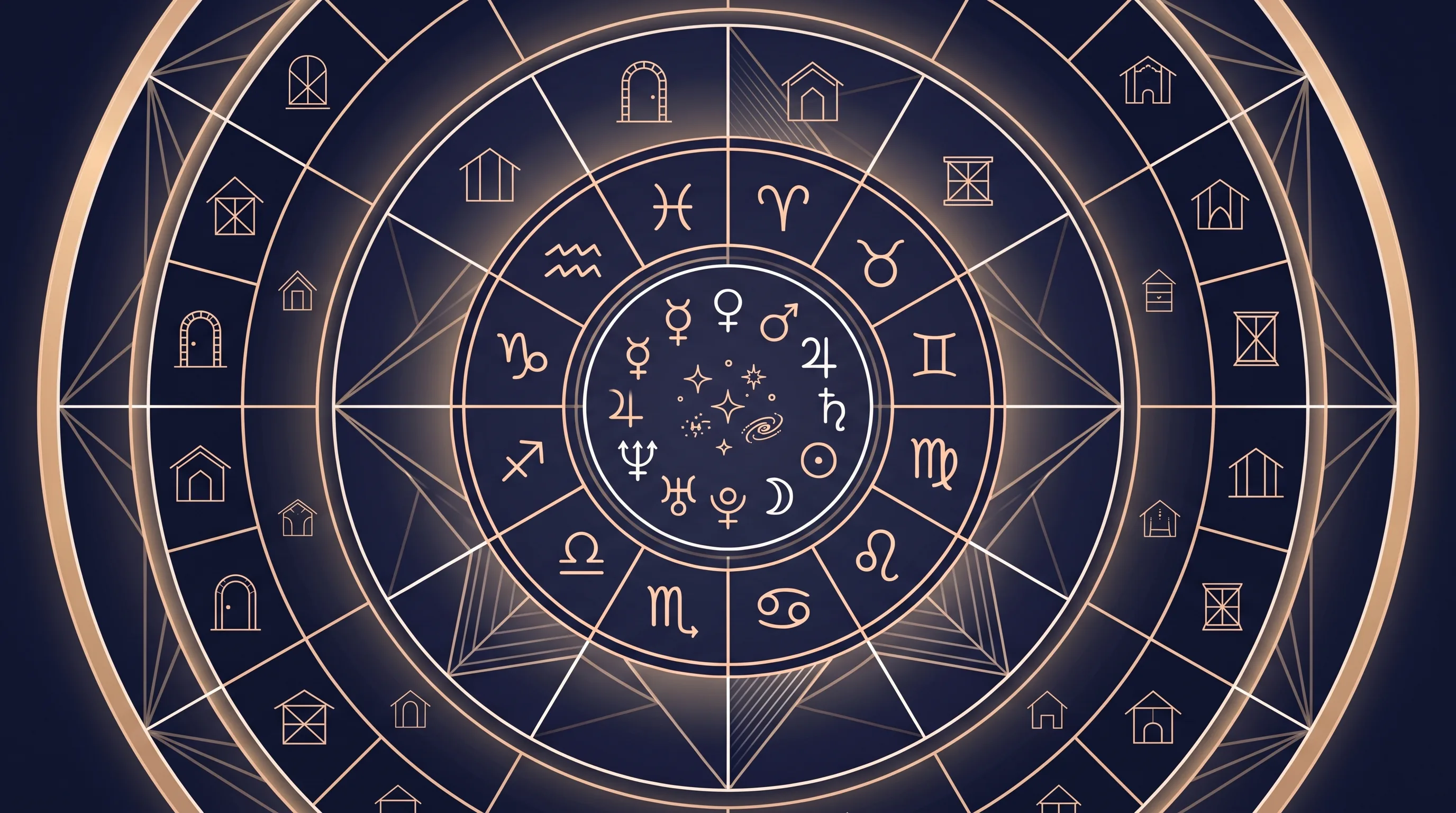
Astrology houses are the twelve life-area segments of a birth chart. While zodiac signs describe how planetary energy expresses itself, houses show where that energy plays out—in identity, money, relationships, career, home, and every other domain of daily life.

Diagram showing planets, zodiac signs, and astrology houses as three layers of a birth chart

Houses vs Zodiac Signs vs Planets

Planets are the actors. Zodiac signs are the style or costume each actor wears. Astrology houses are the stage where the scene happens. Your Sun in Leo (sign) in the 10th house (stage) reads differently from Sun in Leo in the 5th house: same solar identity, but one emphasizes public career and reput...

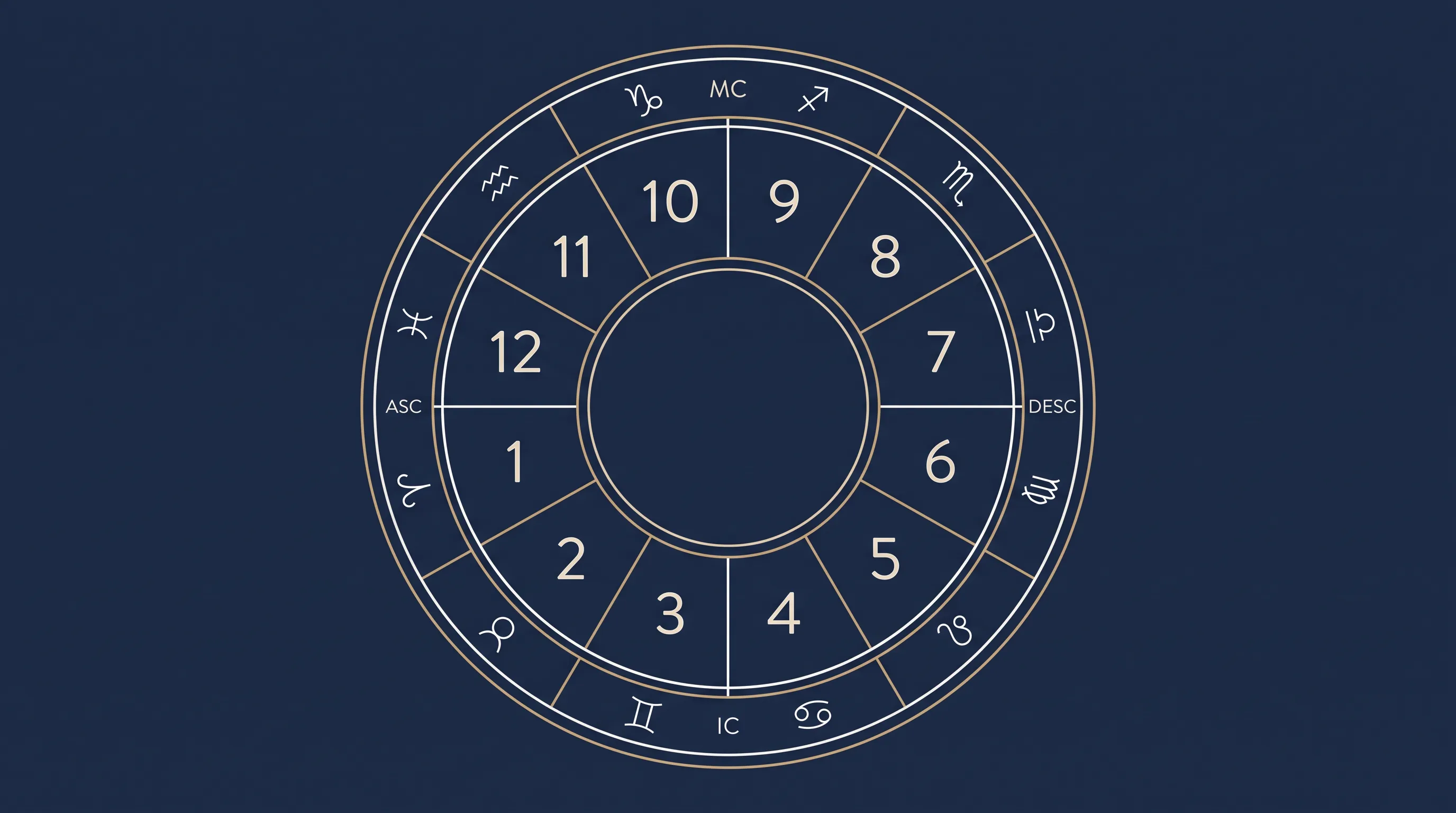
Birth chart wheel diagram showing 12 numbered astrology houses with Ascendant and Midheaven marked

How the 12 Houses Are Numbered

The 1st house begins at the Ascendant—the zodiac sign rising on the eastern horizon at your birth moment. Houses are numbered counter-clockwise around the wheel from 1 through 12. The 4th house sits at the bottom (IC / Imum Coeli), the 7th house at the western horizon (Descendant), and the 10th hous...

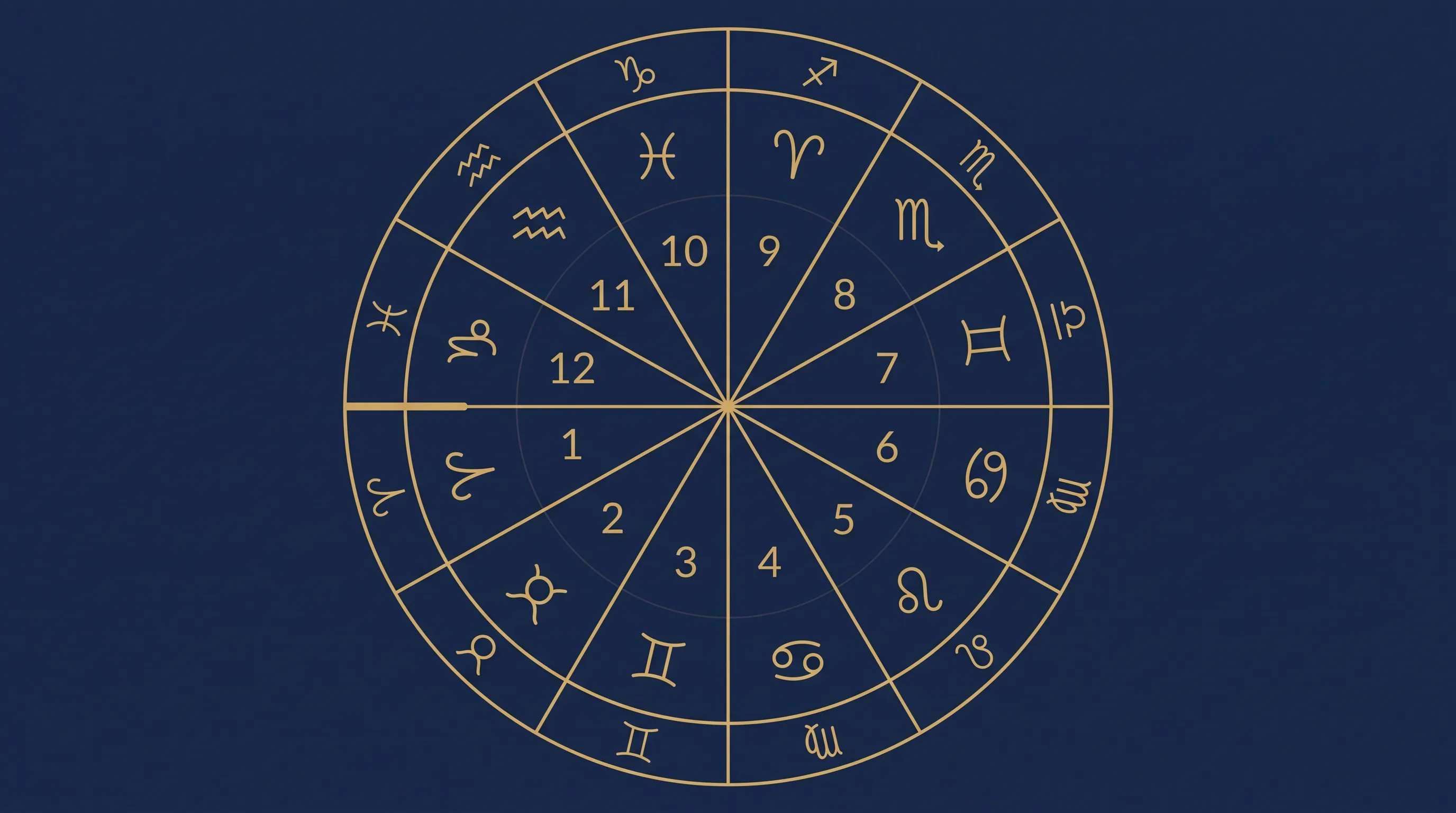
Whole Sign house system diagram showing each zodiac sign as one full astrology house

Whole Sign Houses on AstroCarto

Different astrologers use different house systems. Placidus is common in modern Western astrology; Whole Sign assigns each zodiac sign to one full house, with the rising sign as the entire 1st house. AstroCarto's Birth Chart Generator uses Whole Sign Houses for clarity and beginner-friendly reading—...

HOUSE GROUPS

Angular, Succedent, and Cadent Houses

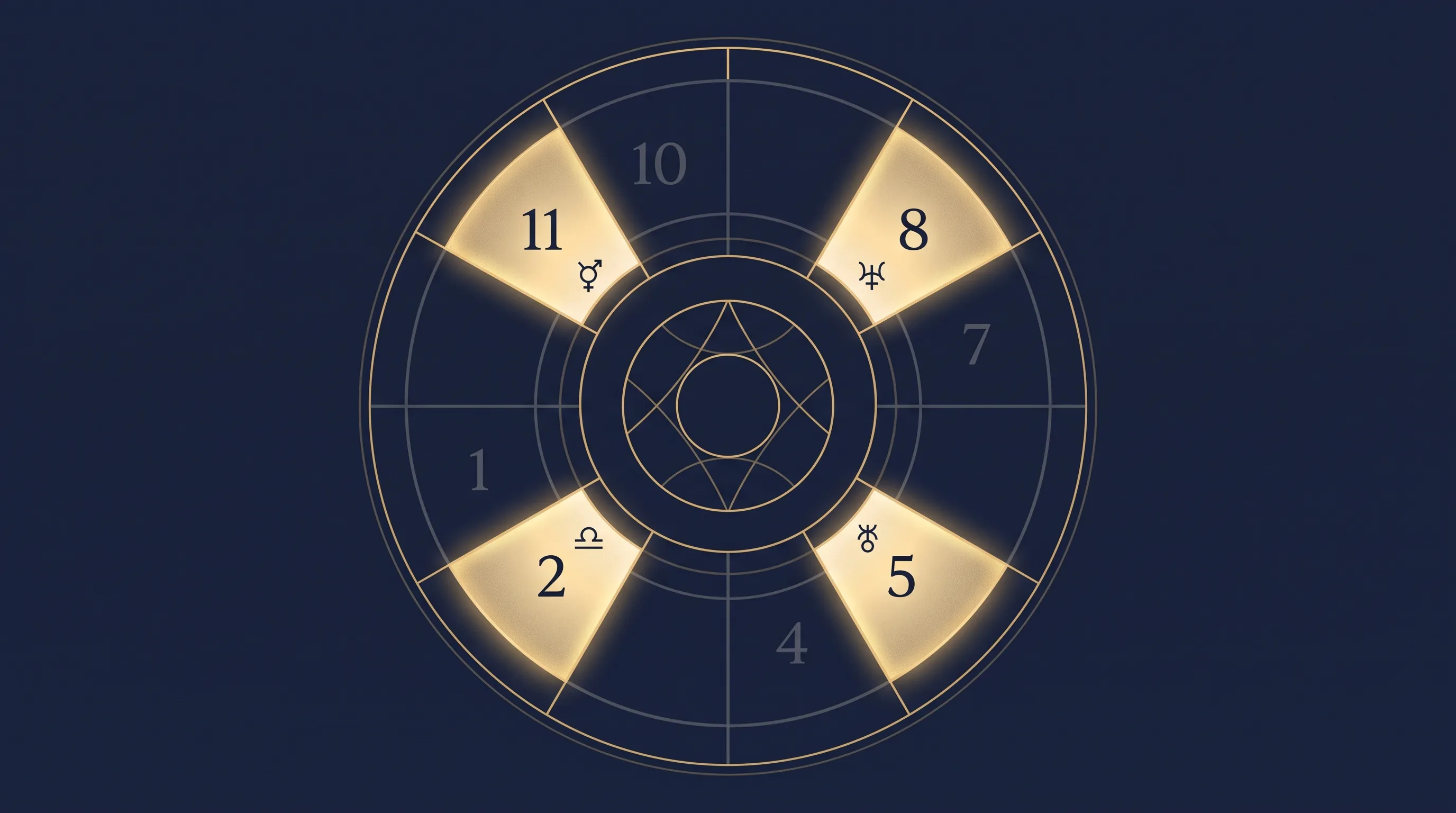
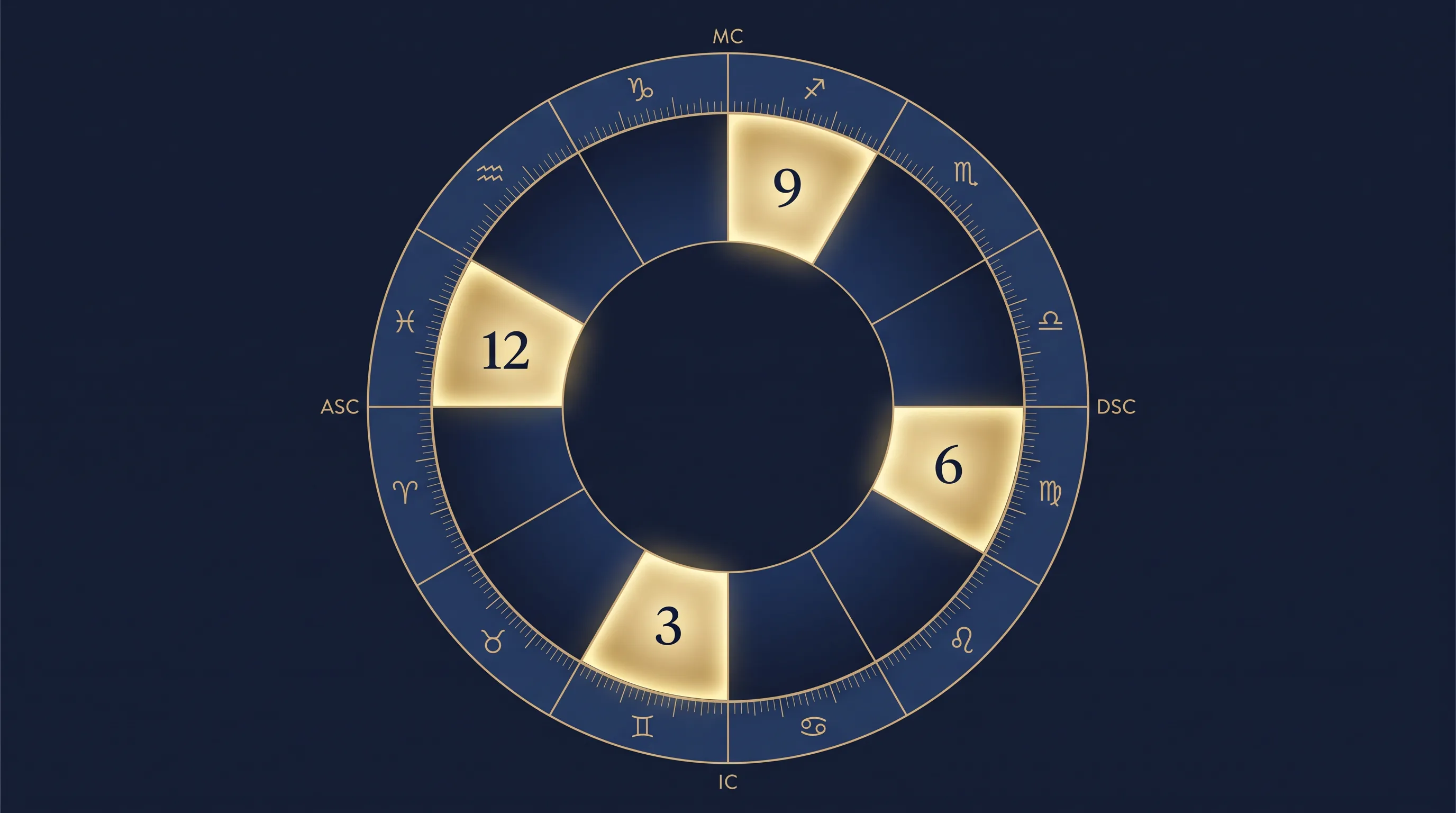
The twelve astrology houses sort into three groups of four. Angular houses carry the most visible weight; succedent houses stabilize what the angles begin; cadent houses extend, adapt, and connect.

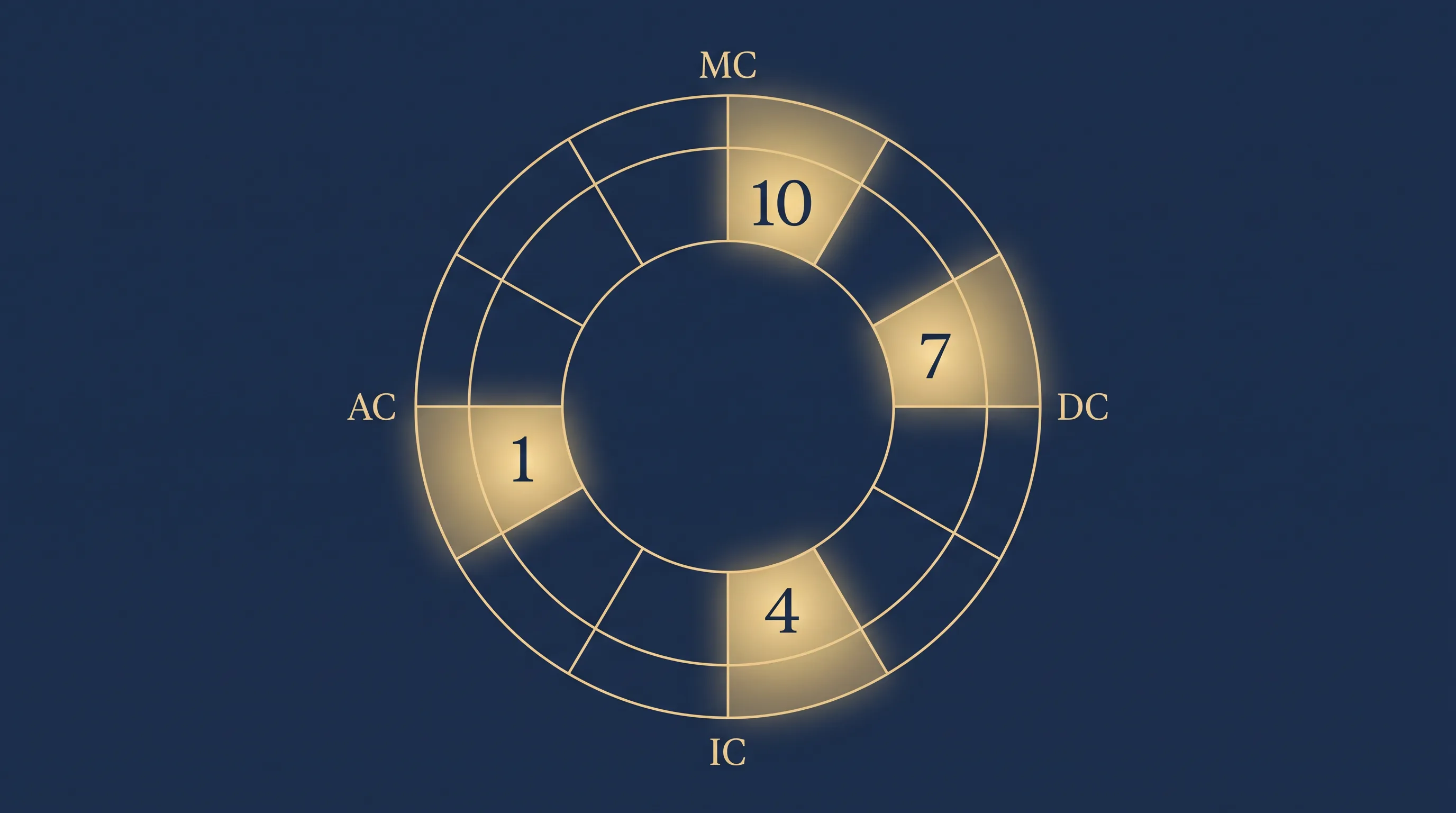
The 1st, 4th, 7th, and 10th houses sit on the chart's four pivots: Ascendant, IC, Descendant, and Midheaven. Planets here tend to broadcast loudly through identity (1st), home and roots (4th), one-on-one relationships (7th), and public career (10th). These are the most consequential houses in astrology for questions like 'Who am I?', 'Where do I belong?', 'Who do I partner with?', and 'What am I known for?'

Astrology chart diagram highlighting angular houses 1st, 4th, 7th, and 10th at the four chart angles
Astrology chart diagram highlighting succedent houses 2nd, 5th, 8th, and 11th
Astrology chart diagram highlighting cadent houses 3rd, 6th, 9th, and 12th
PRACTICAL GUIDE

How to Find Your Astrology Houses

You need three pieces of birth data to locate your astrology houses reliably: birth date, birth time, and birth place. Here is a step-by-step path using AstroCarto's free tools.

Generate your birth chart

Open the Birth Chart Generator, enter your birth date, exact time (to the minute if possible), and location. Click generate to see your chart wheel and placements table. The table lists each planet with its zodiac sign, degree, and house number—this is the fastest way to answer 'Which house is my Venus in?' or 'What house is my Moon in?'

Start with the Ascendant (1st house)

Your rising sign marks the 1st house cusp—the starting point of the house wheel. In Whole Sign, the entire sign on the Ascendant is your 1st house; the next sign is the 2nd house, and so on. If you only need your Ascendant, use the Rising Sign Calculator. The 1st house describes self-presentation, vitality, and how you meet the world.

Read planets by house theme

After you know your house cusps, scan which planets fall in which houses. A planet in the 10th house emphasizes career and public reputation; in the 7th, partnerships; in the 4th, home and family. You do not need planets in every house—empty houses are normal and are read through the ruler of the sign on that house cusp.

Connect houses to location astrology

The 4th house (home, roots) and 10th house (career, public direction) are especially relevant when exploring where to live. After reading your house themes, use Astrocartography to see where planetary lines activate those life areas geographically—useful for relocation astrology and travel planning.

CHART READING

Reading Astrology Houses in Your Chart

Once you know what each of the 12 astrology houses means, these reading habits help you interpret placements without getting lost in jargon.

Empty houses are not 'missing' areas

An empty house does not mean that life area is inactive. Every house has a sign on its cusp, and that sign's ruling planet becomes the house lord—its placement elsewhere in the chart describes how that house theme unfolds. For example, an empty 7th house with Libra on the cusp is read through Venus's sign and house placement.

House + sign + planet together

Always read the three layers together: the house (life area), the sign on the cusp or the planet's sign (style), and any planets inside the house (active actors). Mars in the 6th house in Virgo emphasizes disciplined daily work and health routines; Mars in the 6th in Aries emphasizes urgent, independent action in the same life area.

Birth time accuracy matters most for houses

Sun and Moon sign positions are stable across a birth day, but the Ascendant and house cusps can change within minutes. If your birth time is approximate, treat house placements—especially angles like the 1st and 10th—as provisional. Regenerate your chart when you find a more precise time.

Use Whole Sign as a learning frame

AstroCarto uses Whole Sign Houses so beginners can learn house meanings without debating cusp math. As you advance, you may compare Whole Sign with Placidus or other systems—but sign placements and planetary aspects remain the stable foundation regardless of house system.

FAQ

Astrology Houses — Frequently Asked Questions

Answers to common questions about the 12 houses in astrology and how to read them in your birth chart.

See Your Astrology Houses in Your Birth Chart

Generate your free birth chart wheel and placements table to see which planets fall in each of the 12 houses—then explore how those themes connect to locations on your Astrocartography map.