Moon Symbol ☽: Meaning in Astrology & Your Astrocartography Moon Line
Moon Symbol ☽: Meaning in Astrology & Your Astrocartography Moon Line
If you've ever looked at a birth chart and noticed a simple crescent — that's ☽, the moon symbol. It's one of the oldest glyphs in human history, and in astrology it carries the weight of your entire emotional world.
In this guide, we'll cover exactly what the moon symbol means, where it comes from, and — most usefully — what your Moon line in astrocartography reveals about the places on Earth where you feel most at home, emotionally safe, and deeply yourself.
Quick Answer: What Is the Moon Symbol ☽?
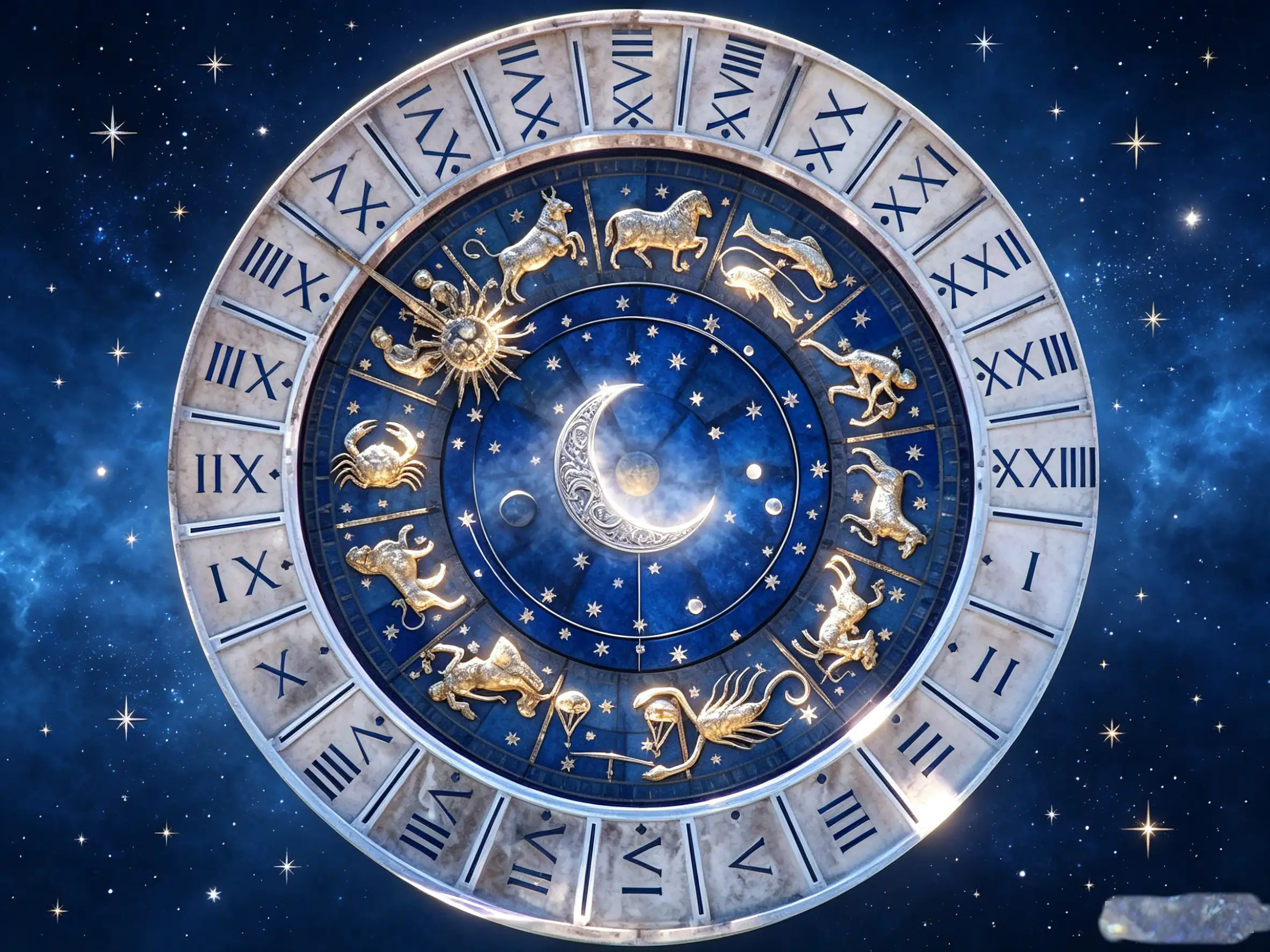
The moon symbol ☽ is a simple crescent shape representing the waxing moon. In astrology, it marks the position of the Moon in your birth chart — your emotional nature, instincts, and sense of belonging. In astrocartography, ☽ appears on your world map to show your Moon lines: the geographic locations where lunar energy is strongest for you personally, and where your emotional needs tend to be most easily met.
Key facts at a glance:
- ☽ = crescent shape, represents the waxing moon
- Governs emotions, intuition, home, and inner security
- One of the two luminaries in astrology (alongside the Sun ☉)
- Your Moon line in astrocartography shows where you feel most "at home" on Earth
- Every birth chart has a moon symbol — its zodiac sign and house vary by person
What Is the Moon Symbol? Origin and Design
The crescent ☽ is among the most universally recognized symbols in human history. Long before modern astrology existed, ancient civilizations tracked the moon's cycles to measure time, plan harvests, and mark sacred seasons.
Why a Crescent?
The crescent captures the moon in its most visually distinct phase — waxing toward fullness. In symbolic terms, the opening of the crescent represents receptivity: the capacity to receive, absorb, and reflect. Unlike the Sun, which radiates outward, the Moon takes in — emotions, impressions, the energy of the people and places around you.
A Brief History of ☽
- Ancient Mesopotamia — the crescent was the emblem of Sin, the lunar god, and appeared on temple walls and royal seals
- Greek and Roman mythology — linked to Artemis (Greek) and Diana (Roman), goddesses of the moon, the hunt, and women
- Alchemy — ☽ represented silver, the feminine principle, and the reflective mind
- Modern astrology — ☽ became the universal glyph for the Moon in birth charts worldwide
Moon Symbol Meaning in Astrology
In astrology, ☽ represents your emotional self — not the face you show the world (that's the Ascendant), but the inner life you live privately. It's how you feel, how you instinctively react, and what you need to feel genuinely safe and nurtured.
When astrologers say "your Moon is in Cancer" or "your Moon is in Capricorn," they're describing the zodiac sign that ☽ occupied at the exact moment of your birth. This placement shapes your emotional style more than almost any other factor in the chart.
Core Themes Ruled by ☽
| Theme | What It Means for You |
|---|---|
| Emotions | How you feel and process your inner world |
| Instincts | Your gut reactions before logic kicks in |
| Home & Belonging | What environments make you feel safe |
| Mother & Nurturing | Your relationship with care and being cared for |
| Memory & the Past | What you carry from childhood and family |
| Intuition | Your psychic sensitivity and inner knowing |
| Habits | Automatic behaviors, comfort zones, emotional patterns |
Moon Sign vs. Moon Symbol — What's the Difference?
A common source of confusion:
- Moon symbol (☽) — the astrological glyph itself, which appears in every birth chart
- Moon sign — the zodiac sign ☽ was passing through at your birth (Cancer, Scorpio, Aquarius, etc.)
Everyone has ☽ in their chart. What differs is which sign and house it occupies — and that's what shapes your unique emotional blueprint.
The Moon Symbol in Astrocartography
This is where ☽ becomes practically powerful — and directly connected to your real-life choices about where to live, travel, and put down roots.
Astrocartography is a technique that projects your birth chart onto a world map. Every planet creates lines running across the globe — locations where that planet's energy is amplified for you specifically. Your Moon lines are where lunar energy is strongest: where emotions tend to flow more freely, where you're more likely to feel "at home" quickly, and where your intuitive sensitivity is heightened.
The Four Moon Lines Explained
There are four ☽ lines on your astrocartography map, based on the four angles of the chart. Each offers a different expression of lunar energy.
Moon ASC Line (Ascendant) — Emotional Authenticity
Places where the Moon was rising on the eastern horizon at the moment of your birth.
This is the most emotionally expressive Moon line. Near it, people often sense your feelings before you say a word — you radiate emotional authenticity. It's a strong line for creative work, emotional healing, and connecting with your inner life. Your intuition tends to be sharp here, and you attract people who appreciate depth and sensitivity.
Good for: emotional healing, creative and artistic work, developing intuition, feeling emotionally seen
Moon DSC Line (Descendant) — Emotional Partnerships
Places where the Moon was setting on the western horizon at your birth.
This line activates emotional partnerships. You're more likely to attract nurturing, emotionally available people here — friends, partners, collaborators who genuinely understand your inner world. Relationships formed on your Moon DSC line tend to have a quality of instant emotional recognition.
Good for: finding emotionally compatible partners, building deep friendships, therapy and counseling work, collaborative relationships
Moon IC Line (Imum Coeli) — Your Soul Home
Places where the Moon was at its lowest point beneath the horizon at your birth.
The IC is the most private, rooted angle of the chart — and the Moon IC line is often described as the "soul home" line. Many people report an immediate, almost inexplicable feeling of belonging when they arrive at a Moon IC location. It's a powerful line for putting down roots, healing family patterns, and creating a genuine sanctuary.
Good for: long-term relocation, finding a "home" city, ancestral healing, real estate, creating a personal sanctuary
Moon MC Line (Midheaven) — Emotional Recognition
Places where the Moon was at its highest point in the sky at your birth.
On the MC, the Moon's energy becomes public-facing. Your emotional intelligence and nurturing qualities become visible — and recognized. This is a strong line for careers that involve caring for others: counseling, teaching, healthcare, community work. People in these places naturally tend to see you as emotionally trustworthy.
Good for: careers in counseling, education, healthcare, or community work; emotional leadership; public recognition for caring qualities
What It Actually Feels Like on a Moon Line
People who spend significant time near their Moon lines commonly describe:
- Feeling emotionally settled much faster than in other places
- Dreams becoming more vivid and meaningful
- A stronger-than-usual instinct about people and situations
- Finding it easier to express feelings without overthinking
- A pull to nest, create a home, stay longer than planned
That said, ☽ lines also bring heightened sensitivity — which means if you're going through a difficult emotional period, those feelings may be more intense near your Moon lines. The line amplifies lunar energy in both directions.
Moon Symbol vs. Other Planet Symbols
Understanding ☽ is easier when you see it alongside related symbols:
- ☽ vs. ☉ (Sun) — The Sun is your conscious identity; the Moon is your emotional interior. The Sun is who you are in the world; ☽ is how you feel privately.
- ☽ vs. ♀ (Venus) — Venus governs love and attraction; the Moon governs emotional needs and nurturing. Venus is what you enjoy; ☽ is what you need.
- ☽ vs. ♇ (Pluto) — Both deal with deep inner experience, but Pluto drives transformation through crisis. The Moon is more cyclical — ebb and flow, rather than rupture.
How to Find Your Moon Lines
Your Moon lines are unique to your birth data — the exact date, time, and location of your birth. Two people born in the same city on the same day but hours apart can have very different Moon lines.
To find yours:
- Go to Astrocarto.org
- Enter your birth date, exact birth time, and birth location
- Generate your free astrocartography map
- Look for ☽ lines on the map — typically shown in silver or white
The map will show you all four Moon lines (ASC, DSC, IC, MC). You'll likely find that one or two pass through places you've always felt drawn to — or places where you've already had significant emotional experiences.
→ Generate your free astrocartography map and find your Moon lines
Frequently Asked Questions
What does the moon symbol ☽ mean in a birth chart?
☽ marks the position of the Moon at your birth, revealing your emotional nature, instinctive reactions, and what you need to feel secure. It's one of the most important placements in any chart.
Which Moon line is best for finding a home?
The Moon IC line is generally considered the strongest for finding a place that feels like home. IC energy is rooted, private, and deeply personal — it's the line most associated with belonging and putting down roots.
Can I feel a Moon line on a short visit?
Yes. Many people notice an emotional shift — often a feeling of unexpected ease or comfort — within hours of arriving at a Moon line location. A stay of one to two weeks gives you a fuller sense of the energy.
How wide is the influence of a Moon line?
The strongest influence is within roughly 100 miles of the line. A softer influence can extend 300–400 miles. Cities sitting directly on your Moon line tend to feel most distinct.
What's the difference between a Moon ASC line and Moon IC line?
Moon ASC is about emotional expression and visibility — how you feel outwardly. Moon IC is about emotional roots and private belonging — how you feel inwardly. ASC lines tend to be more socially activating; IC lines tend to be more quietly restorative.
Conclusion
The moon symbol ☽ is more than a glyph on a chart — it's a map to your emotional world. And in astrocartography, it becomes a literal map: showing you the places on Earth where that emotional world feels most supported, most alive, and most like home.
Whether you're planning a move, choosing where to travel, or simply trying to understand why certain places feel different from others — your Moon lines are one of the most revealing places to start.
→ Find your Moon lines now — generate your free astrocartography map at Astrocarto.org
Related Articles
- Uranus Symbol ♅: Innovation, Freedom & Your Uranus Line
- Neptune Symbol ♆: Spirituality, Dreams & Your Neptune Line
- Saturn Symbol ♄: Discipline, Mastery & Your Saturn Line
- How to Read Your Astrocartography Map
- What Is Astrocartography? A Beginner's Guide
Last updated: May 2026
Generate your free astrocartography chart on the world map.
Free Astrocartography Chart & Map →